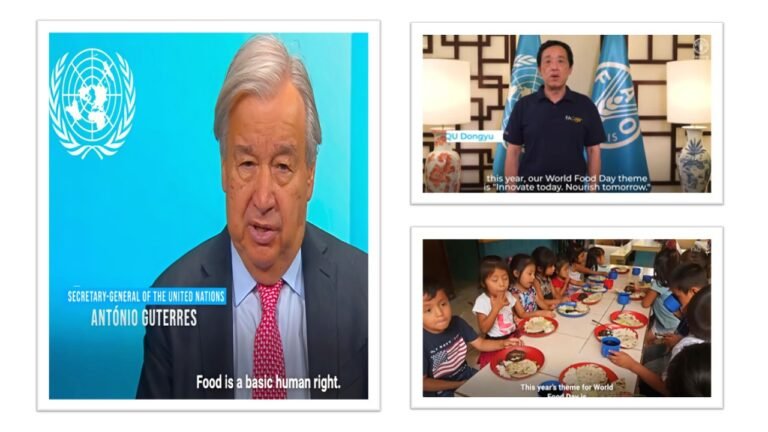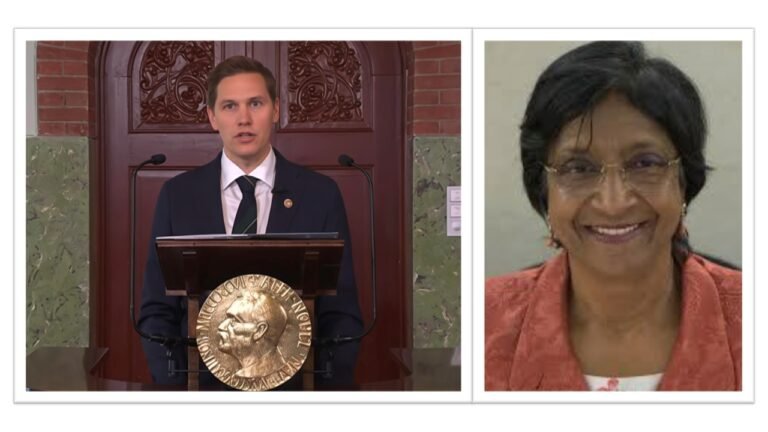

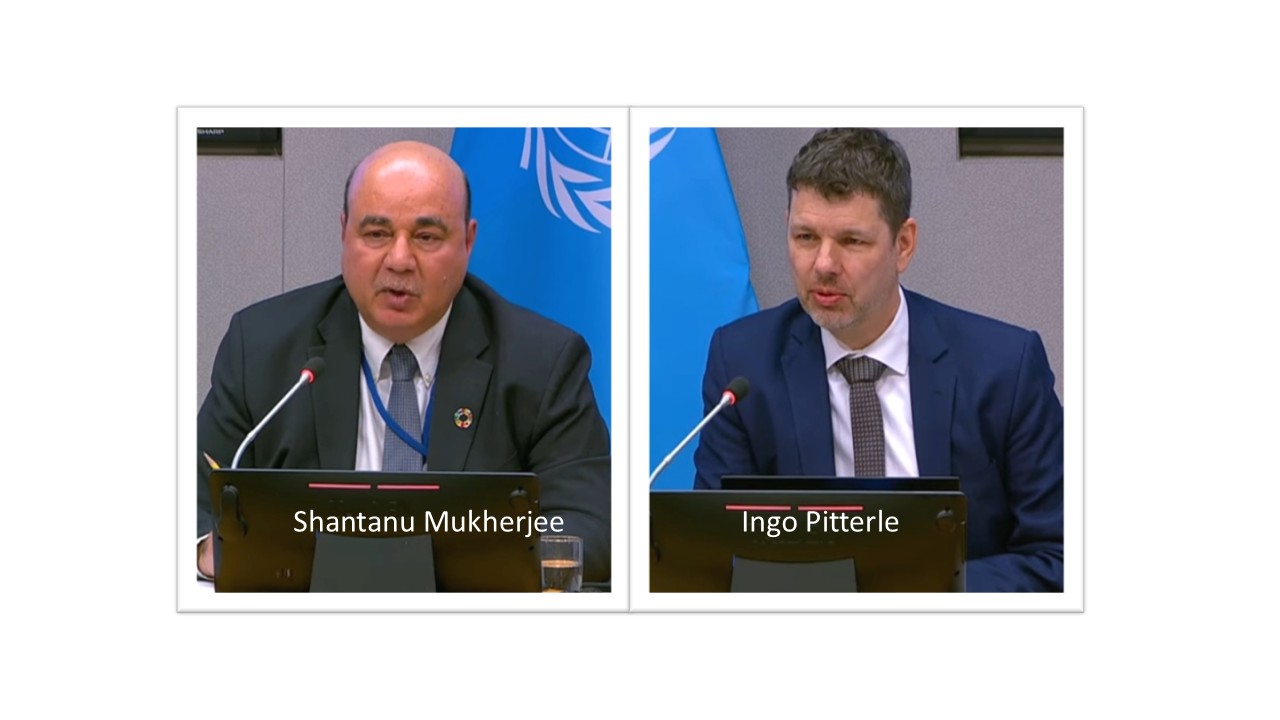
19 May 2026 at the launch of ‘World Economic Situation and Prospects as of mid-2026 updates the global and regional economic outlook’, Shantanu Mukherjee – Chief, Policy Analysis Branch, Division for Sustainable Development, UN-DESA and Ingo Pitterle, Officer-in-charge, Global Economic Monitoring Branch, UN-DESA, said this report described that crisis in Middle East has delivered another major shock to the world economy with heightening uncertainty, stoking inflationary pressures and testing the global growth’ resilience. Countries face varying degrees of exposure to the shock and differ in their capacities to cope, including leading to uneven impacts. For many developing economies, intensifying cost-of-living pressures, limited policy space, and slowing growth prospects risk further setbacks in advancing the Sustainable Development Goals, while entrenching inequalities across and within countries
Shantanu Mukherjee – Chief, Policy Analysis Branch, Division for Sustainable Development, UN-DESA, explained that global growth is projected to slow to 2.5 percent in 2026 before edging up to 2.8 percent in 2027—a downgrade from January forecasts and well below pre-pandemic norms. Unfortunately, in a more adverse scenario, global growth may fall to 2.1% in 2026; or at the weakest outcomes since beginning of this century, outside of the COVID-9 pandemic and global financial crisis.
Forecasting is not an exact science, but numbers used in this report, have been discussed earlier and already clear, such as 1) Growth expectations which were already muted at the beginning of the year are now still weaker. In our baseline forecast, global growth in 2026 is expected to be 7 percentage points below the average from the pre-pandemic decade. 2) Developing countries are being hit harder. Their growth in 2026 is projected to be a full 1.3 percentage points below the pre-pandemic norm.
After 3 years of easing price pressures, we are seeing a reversal. Global inflation is projected to rise to 3.9% this year which is 0.8 percentage points higher than anticipated in January. Increased energy prices are a potent factor as the prices of refinery products are crucial to industrial production and commercial transport. This increase is not uniform; it differs in their degree of exposure as well as in structural features of their economies. The largest upward revisions are in South Asia where inflation is expected to be up by 5.1 percentage points and in Western Asia expected to be up by 3.4 points since January.
Now, what does it mean in practical terms? Higher prices are eroding real incomes, reducing purchasing power and raising costs for businesses. In short term, this could push more people into poverty. Over the medium term, the risks could be even more serious; as it hits the business/commercial including banking and financial domains. The energy shock has halted global disinflation trend, with higher energy prices feeding through to broader costs across the economy Mr. Mukherjee emphasized that though the prospects are somber, there are concrete areas where international cooperation makes a difference such as: countries face a renewed impetus for establishing resilience, whether be through investing in renewable energy and energy efficiency, diversifying their economies, making targeted sectoral interventions are improving mobilization and use of resources. All of these are shared priorities that the international system and the UN can help support.
Ingo Pitterle, Officer-in-charge, Global Economic Monitoring Branch, UN-DESA; said that global disinflation trend has gone into reverse, consequently the burden is falling hardest on those least able to absorb it. Meanwhile, higher inflation drives to more expensive financial tradeable means and turns truly matters to people’s lives and the sustainable development agenda. This is the reason why international cooperation turns vital to help stabilizing energy markets, reduce uncertainty and mobilize greater financial support for the economies most at risk.
Related link:
World Economic Situation and Prospects Mid-2026 – DESA Press Conference | United Nations