


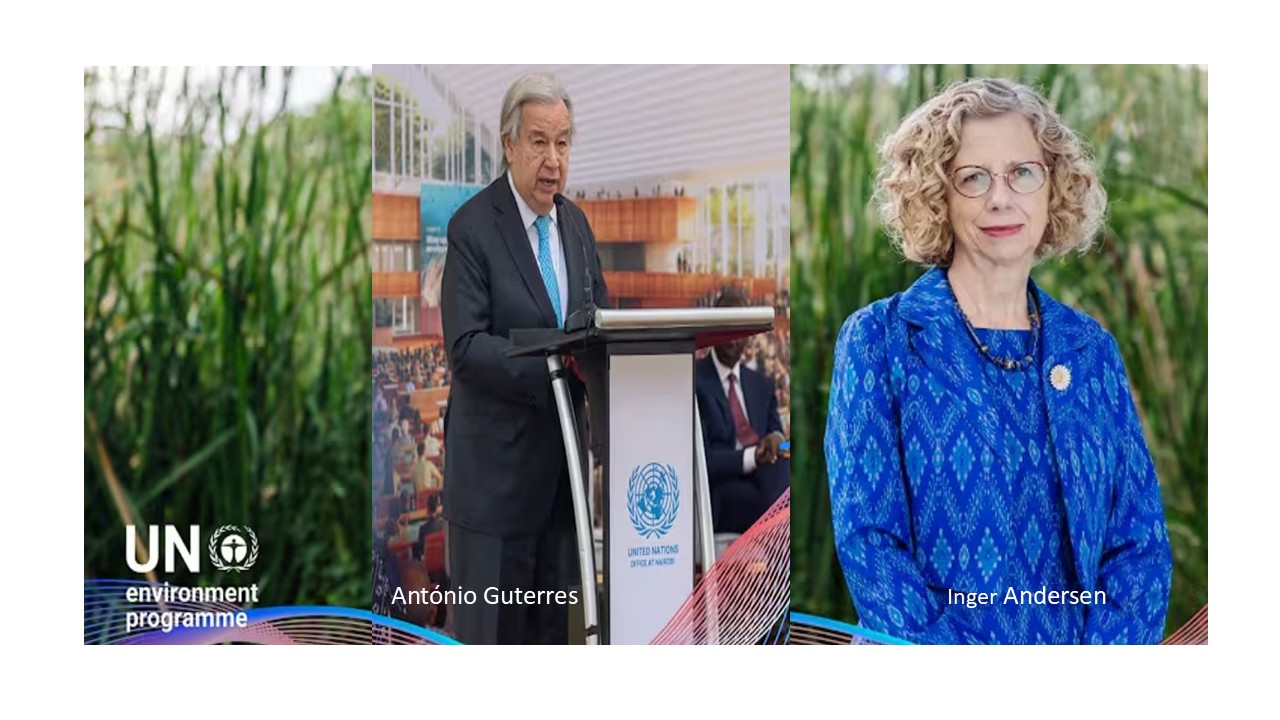
On this 2026 World Environment Day, we join the call by António Guterres – UN Secretary General and Inger Andersen – Executive Director UNEP : ‘let’s act with urgency and determination, helping build a cooler, safer and healthier future for all’. Global temperature rise is on track to exceed 1.5 degrees, and every increment above this level will be felt in lives lost, in devasted communities and in damaged infrastructure, particularly, in cities.
Climate scientists have issued reminders since 9 April 2026 — NOAA officially declared the end of a La Niña pattern and predicted an El Niño to form by mid-summer. Since then, climate models have aligned, highlighting ‘a strong El Niño is now likely — with some using adjectives such as “super” or “Godzilla” to describe this potentially historic event.’
Actually, climate scientists are particularly concerned about this year’s anticipated event. It is predicted that the effect of heat stored’ release in the Pacific may boost global temperatures which currently are already sky high because of human-caused climate change. David Dickson, CCNow’s resident meteorologist and TV Engagement Coordinator, confirms ‘there is no two El Niño/La Nina events are the same’.
El Niño-Southern Oscillation (ENSO) – the natural cycle of warm and cool water in the equatorial Pacific – is arguably one of Earth’s most influential climate patterns, driving changes to temperature and precipitation trends around the world, oscillating between La Niña, El Niño and neutral. The stronger an El Niño pattern is the more persistent and widespread its impacts are. ENSO is one of many variables impacting how weather plays out in a region. Each ENSO phase generally follows a pattern of influencing weather around the world — each event varies in terms of strength, duration, time of year it develops, and interactions with other climate and weather patterns. Consequently, El Niño events have had tremendous human and economic impacts, influencing catastrophic droughts, driving infectious diseases outbreaks, worsening food and water insecurity, and disrupting global commerce.
The impacts of El Niño on precipitation and temperatures vary across regions; meteorologists call these teleconnections. While studying maps of more consistent teleconnections associated with each phase of ENSO is a good place to begin getting a deeper understanding of these weather patterns, reach out to experts at your local weather or climate office to learn how previous El Niño events have played out in your area. Therefore, for better understanding and knowledge, it is required to consult a local meteorologist or climatologist. Bear in mind that the most recent El Niño helped make 2024 the hottest year recorded in human history, and forecast models predict a similar, if not more intense boost, by the end of this year and into 2027.
Related link:
Adapting to a 50°C world | UNEP
Les Alpes s’écroulent à cause du dérèglement climatique • FRANCE 24
Expert warns 2026 El Niño may rival the strongest on record • FRANCE 24 English
Arrivée d’El Niño : sommes-nous condamnés à subir ? • FRANCE 24
How El Niño could change the world | The Global Story | BBC News
The Hidden Cost of Climate Change: Understanding Non-Economic Loss and Damage | UNEP
António Guterres (UN Secretary-General) on World Environment Day 2026
UN Environment Programme Executive Director Message | World Environment Day 2026 #nowforclimate